Block Blitz: Puzzle Adventure
BluetilePuzzle
4.72.81K Reviews
- Version
- 2.7.0
- Installs
- 1.00M
- Age Rating
- Everyone
Screenshots
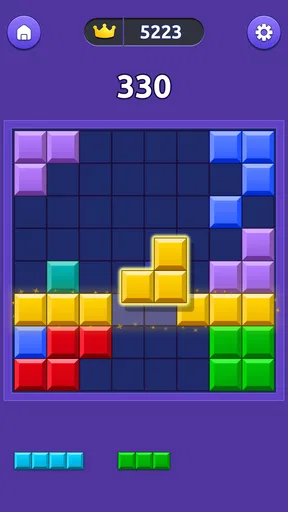
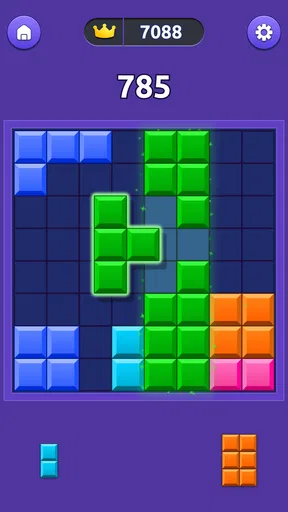
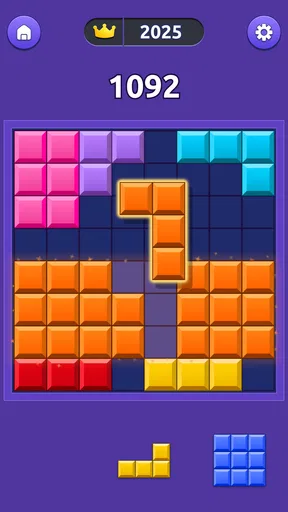
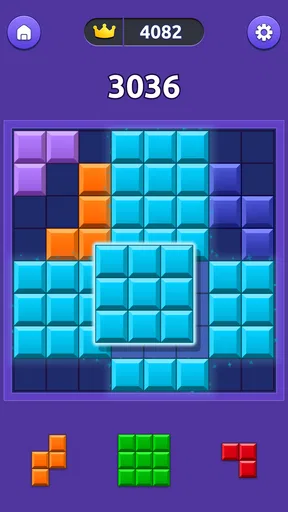
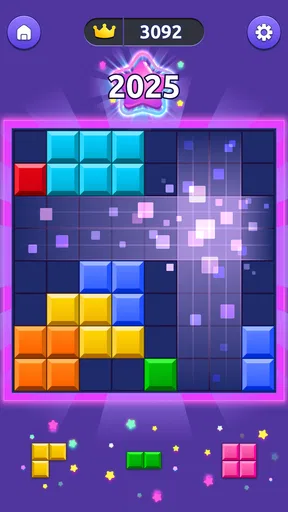
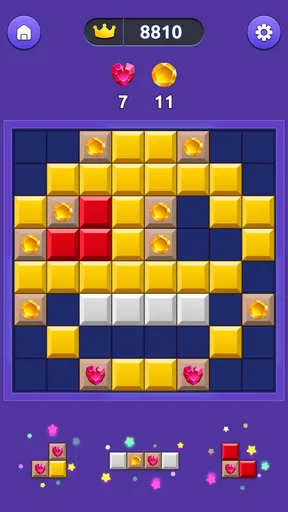
Our Review of Block Blitz: Puzzle Adventure
 Analysis by Appyee
Block Blitz: Puzzle Adventure is the kind of puzzle game I open when I want something active enough to hold my attention but simple enough to understand immediately. Its main appeal is the short block-solving session: pieces arrive, I look for a useful place to put them, and I try to keep the board manageable before a careless move closes off too many options. That focus gives it a clear identity. It is not trying to replace a long story-driven game or a deep strategy title; it is built around quick decisions and the satisfaction of fitting shapes together.
After spending time with it, I think its strongest capability is the way it turns a few spare minutes into a compact mental exercise. The game comes from Bluetile and is free to start, with optional in-app purchases priced from $2.49 to $4.99 per item. It is rated for Everyone, so its basic presentation is approachable for a broad audience. The store’s audience has already made that clear in a practical way: the game has passed 1 million installs and holds a 4.7 average from around 119 thousand ratings.
Those figures are useful context, but they do not tell me whether a puzzle game will fit my habits. What matters here is the rhythm. Block Blitz: Puzzle Adventure is at its best when I want a focused break without learning a complicated rule set first. It is less convincing for someone looking for a substantial campaign, a strongly narrative experience, or a puzzle system that keeps unfolding through many layers of new mechanics.
Why the quick block challenge works
The central capability is fast board management. I am constantly making a small prediction: if I place this piece here, will I leave enough room for the awkward shapes that may follow? That question gives the game more depth than simply filling empty spaces. The individual move is easy to understand, but a sequence of reasonable-looking moves can still create a poor position.
This design makes the game feel more like planning under pressure than casual tapping. I do not need to memorize a large rulebook, and I can begin making useful decisions almost immediately. At the same time, I cannot play entirely on autopilot. The board asks me to balance immediate progress against future flexibility, which is where the brain-training side of the experience comes from in everyday use.
I particularly like that the game’s appeal does not depend on a complicated story or a large collection of characters. The blocks are the reason to return. That narrow focus is a strength when I want a clean puzzle session, because there is little between me and the next decision. It is also the first important limitation: players who need a strong sense of exploration or progression may find the basic loop too concentrated.
The “quick blast” idea is more meaningful here than it might sound. A short session can still feel complete because the game gives me a small problem to solve rather than asking me to remember a long chain of events. I can play while waiting for an appointment, during a commute when I am safely seated, or between larger tasks. The game does not require me to reserve a whole evening for it.
Reading the board instead of chasing every opening
In practice, I get better results when I stop treating every empty space as an opportunity. A tempting gap may accept the current piece, but it can also split the board into awkward pockets. My more reliable approach is to preserve broad, usable areas and avoid creating isolated holes unless the placement produces a clear benefit.
That habit is one of the less obvious pleasures of Block Blitz. The game rewards visual discipline. I am not merely asking where a piece fits; I am asking what kind of board I will have after it fits. When several placements are possible, I prefer the one that keeps future choices open, even if it does not look like the most productive move at first.
Another useful adjustment is to slow down at decision points. Because the game is designed for quick play, it is easy to tap the first acceptable position. I found that a brief pause before committing often matters more than trying to move faster. The pause lets me compare the shape of the remaining open spaces rather than reacting only to the piece in front of me.
This is where the game can quietly become a concentration exercise. It is not difficult because the controls are complex; it is difficult because careless attention has consequences. If I am distracted, I tend to make locally convenient placements. If I give the board a proper glance, I make choices that protect the next several moves.
What a normal session feels like
A realistic use case is a short break after finishing a task. I can open the game, play until I reach a natural stopping point, and put it away without feeling that I have abandoned a larger objective. That makes it easier to fit into a daily routine than a game that depends on long missions or uninterrupted concentration.
It also works well when I want something more engaging than passive scrolling. Instead of consuming another stream of short videos, I am looking at a board, testing possibilities, and accepting the result of my choices. The session may be brief, but it still gives me a sense of participation. For me, that is the difference between a useful casual game and an app that simply fills time.
The same quality can be a drawback during a tired moment. When I want complete relaxation with no chance of making a bad decision, even a simple block puzzle may feel like work. The game is calming when I enjoy arranging the board, but it is not passive. Its relaxing quality comes from narrowing my attention, not from removing all mental effort.
I would also be careful about recommending it as a guaranteed learning tool for children simply because it is rated for Everyone. The age rating makes it broadly accessible, but a parent should still decide whether the quick-repeat puzzle loop suits a particular child’s attention and screen-time habits. The game is friendly in concept, yet any repeatable mobile game can become a default distraction if used without limits.
Small decisions that improve the experience
My first practical tip is to think in terms of board shape rather than individual block value. A placement that completes a useful area can be better than one that fills more visible space. I try to keep the board’s open regions connected and avoid building tall or uneven arrangements that leave me dependent on one very specific future shape.
My second tip is to treat awkward pieces as planning information. When a shape does not fit comfortably, I do not immediately force it into the nearest gap. I look for a placement that reduces the number of future dead ends. This changes the game from “where can I put this?” to “which placement leaves me the most options?” That shift makes the puzzle feel more deliberate.
My third tip is to use the game as a reset between demanding activities rather than as a background activity while doing something else. The board needs visual attention, and split attention makes the experience less satisfying. A short, intentional session gives me more value than playing while constantly switching to messages or other apps.
These are not complicated techniques, but they reveal the trade-off at the heart of the game. The rules are accessible, while the quality of my decisions depends on how carefully I observe the board. Someone looking only for instant rewards may enjoy the first few moves but miss the deeper reason the loop stays interesting.
Where it stands beside familiar puzzle alternatives
Compared with a traditional match-three game, Block Blitz puts more emphasis on spatial planning and less on scanning for a single obvious combination. Match-three games often make the next action visually loud; here, I have to consider how the whole arrangement develops. That makes this a better choice for players who enjoy shape placement and a little forward planning.
Compared with a classic falling-block game, the experience feels less centered on rapid reflexes and more on evaluating available space. I am still managing a board, but the satisfaction comes from preserving room and making clean decisions rather than simply reacting to pieces descending at speed. Players who want intense timing may prefer the classic alternative, while players who like a calmer pace may appreciate this approach.
Compared with a large logic-puzzle collection, this game is more focused and easier to enter. I do not have to choose between many puzzle types before starting. That simplicity is convenient, but it also means less variety. If I want number puzzles, word challenges, or elaborate deduction problems in the same app, a broader collection may offer more long-term range.
The comparison also explains why the game’s popularity makes sense without making it ideal for everyone. Its rules are familiar enough to understand quickly, but its board decisions provide more substance than a completely mindless time-filler. The compromise is that the experience remains intentionally narrow. It succeeds by refining one activity rather than trying to become an all-purpose puzzle platform.
Free access, optional purchases, and everyday friction
The free entry point is important because this is a game I would want to test casually before deciding whether it deserves a regular place on my phone. I can begin without treating it as a major purchase, and the optional items sit in the $2.49-to-$4.99 range. That makes the initial decision straightforward, although I would still check the purchase prompts carefully if a child uses the device.
Optional spending can change how comfortable a player feels with the game, depending on what those items do during play. I would not buy anything automatically. My advice is to first decide whether the basic puzzle loop itself is enjoyable. If the board decisions are not satisfying without extras, a purchase is unlikely to solve the underlying problem. If the game already fits a player’s routine, an optional item may feel more reasonable, but it should remain a deliberate choice rather than part of the tapping habit.
The current version is 2.7.0, and the game supports devices running Android 7.0 or later. That broad compatibility makes it easier to consider on an older Android phone, though actual comfort will still depend on the device’s screen, responsiveness, and battery condition. A smaller display may make visual planning less comfortable, especially when I am comparing several possible spaces at once.
One friction point is repetition. The same core activity that makes the game easy to pick up can eventually feel familiar. I would not choose it expecting a constantly changing structure. Its longevity depends on whether I enjoy improving my judgment, finding cleaner placements, and returning for another compact challenge. If I need frequent surprises, a puzzle adventure with changing environments or a larger set of mechanics will probably hold my attention better.
Who gets the most from this focused design
I think Block Blitz is a strong fit for people who like short, self-contained puzzle sessions and want a game that asks for attention without demanding a large time commitment. It suits commuters, students taking a brief mental break, and anyone who prefers a quiet board challenge to an action game. It is also a good option for players who enjoy improving through observation rather than learning complex systems.
It may appeal especially to someone who says they like puzzle games but often abandons them when the opening tutorial becomes too long. The block-based format is easy to grasp, while the real challenge grows from placement choices. That combination lets a new player begin comfortably and still gives an experienced player room to become more careful and efficient.
I would steer away from it if your priority is a rich narrative, competitive multiplayer, a large progression map, or a wide variety of puzzle genres. I would also skip it if you dislike replaying a similar board-management loop. The game’s strength is concentration around one idea, so the wrong audience will experience that focus as repetition rather than refinement.
For families, the Everyone rating makes the game broadly approachable, but I would frame it as a shared casual puzzle rather than assume it is automatically educational. A parent could use a session to talk about planning ahead, leaving space, and learning from a poor move. That value comes from how the game is used, not from the age label alone.
My recommendation after playing
My overall view is positive, with a clear condition: you need to enjoy spatial organization. The game does not hide its central idea behind unnecessary complexity, and that honesty works in its favor. I can open it quickly, understand the immediate task, and spend a few minutes making choices that feel more thoughtful than ordinary tapping.
The best way to approach it is as a compact mental break, not as a substitute for a full-scale adventure. I would play with enough attention to compare placements, protect open space, and accept that a quick move is not always a good move. Those small habits make the experience richer and help explain why the puzzle remains engaging beyond its simple presentation.
Bluetile has made a free puzzle game that knows what it wants to be. It is accessible, easy to revisit, and capable of turning an idle moment into focused play. Its limitations are equally clear: the loop can become repetitive, optional purchases deserve a conscious approach, and players seeking story or broad variety should look elsewhere. For me, though, Block Blitz: Puzzle Adventure earns a recommendation when the goal is a fast, thoughtful block challenge that fits naturally into everyday breaks.
Verdict
Strengths of Block Blitz: Puzzle Adventure
- Quick levels make it easy to play during short breaks.
- Bright visuals and cheerful effects make the board feel lively.
- Simple controls are suitable for players of almost any age.
- Increasing difficulty keeps the puzzle challenge engaging.
- Offline play is convenient when no internet connection is available.
Limitations of Block Blitz: Puzzle Adventure
- Some stages can feel repetitive after extended play sessions.
- Later levels may rely heavily on trial and error.
- Hints or boosters may be limited without watching ads or spending currency.
- Frequent ad interruptions can affect the pace of casual play.
- Progress may feel slow for players who prefer faster rewards.
Other Releases by Bluetile
View All

Ball Sort Puz - Color Game
Puzzle4.8

Water Sort Puz - Color Game
Puzzle4.8

Dot Link - Connect the Dots
Puzzle4.8
Similar Picks in This Category
View All
Block Blast!
HungryStudio4.8

Braindom: Brain Games Test
Lahana Game Studio4.6

AMAZE!
CrazyLabs LTD4.6

Sudoku - Classic Sudoku Puzzle
Oakever Games4.7

Art Puzzle - Puzzle Games
Easybrain4.8

Amaze GO!
Oakever Games4.9
Frequently Asked Questions
What is Block Blitz: Puzzle Adventure, and how is the gameplay structured?
Block Blitz: Puzzle Adventure is a casual block puzzle game that combines classic shape-matching mechanics with a level-based adventure format. Players place differently shaped blocks on a grid, complete rows or columns, and try to clear the board before running out of space. The adventure structure typically adds objectives, progression, rewards, and increasingly challenging stages, making it more varied than a simple endless puzzle mode.
Is Block Blitz: Puzzle Adventure free to download and play?
The game is generally available as a free download, allowing players to begin solving puzzles without paying upfront. However, free-to-play games may include optional in-app purchases for coins, boosters, extra moves, lives, or other conveniences. Advertising may also appear between levels or during certain activities. Before downloading, check the store listing for the current pricing, ads, and purchase information, especially if children may use the device.
Does Block Blitz: Puzzle Adventure require an internet connection?
Some parts of Block Blitz: Puzzle Adventure may work without a constant internet connection, particularly basic puzzle levels that have already been downloaded. Nevertheless, online access can be required for advertisements, cloud synchronization, special events, leaderboards, updates, and in-app purchases. Offline availability can also vary between versions and devices, so players who want to play while traveling should test the game after installation rather than assuming every feature works without internet.
Are there boosters, extra lives, or other in-game purchases?
Block Blitz: Puzzle Adventure may use familiar free-to-play systems such as boosters, coins, energy, extra attempts, or rewards for completing objectives. These features can help when a level becomes difficult, but they are not always necessary for normal progress if you are willing to replay stages or wait for replenished resources. Review the purchase settings carefully and consider enabling parental controls to prevent accidental transactions.
Is Block Blitz: Puzzle Adventure suitable for children and casual players?
The simple controls and easy-to-understand block mechanics make Block Blitz: Puzzle Adventure approachable for casual players and older children. Difficulty can increase as new objectives and tighter boards are introduced, so younger users may occasionally need help. Parents should also review the game’s advertising, privacy information, online features, and in-app purchase options. Suitability ultimately depends on the child’s age and the access restrictions configured on the device.
Play our best games!


